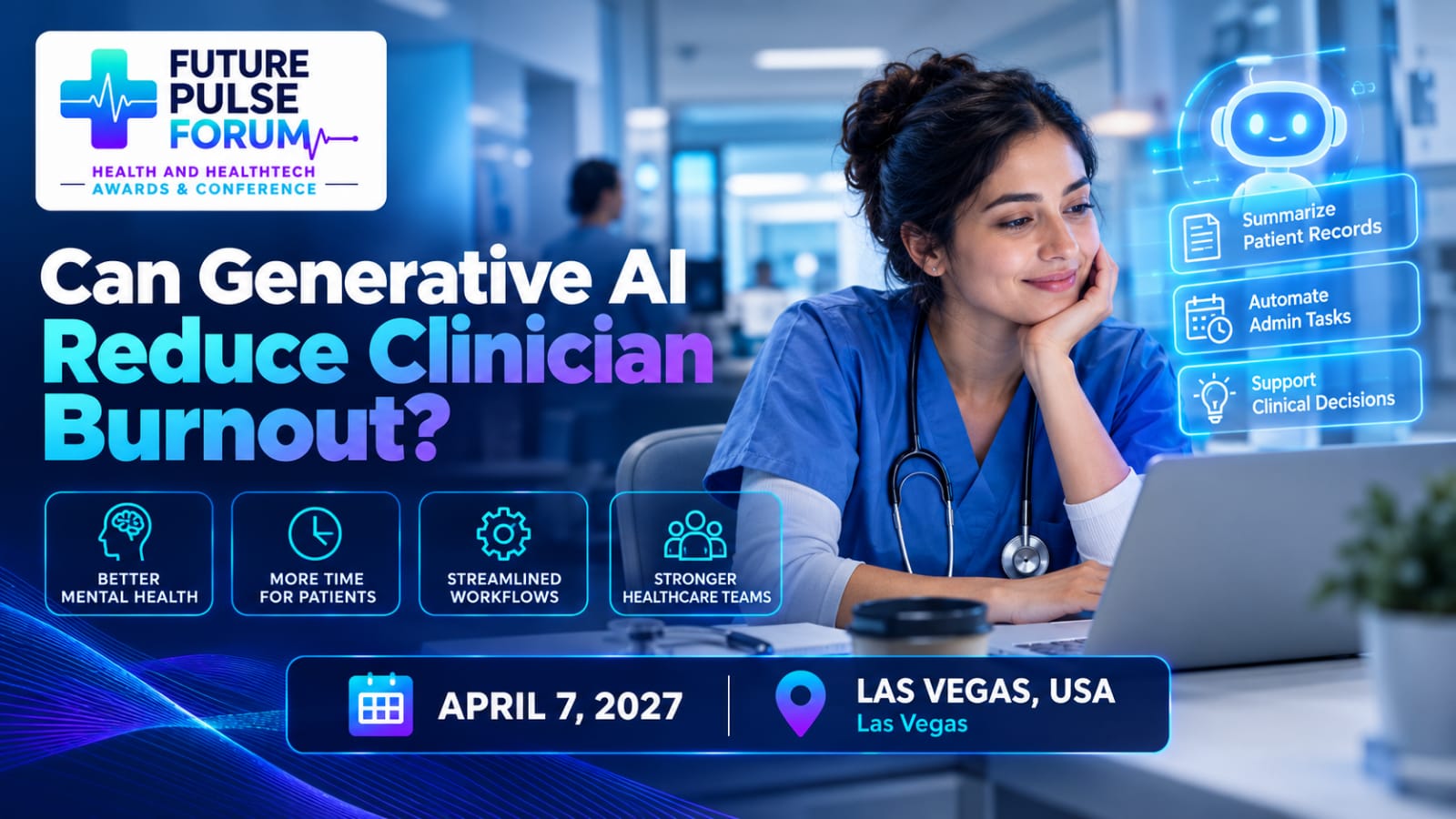
Clinician burnout is a growing challenge for healthcare systems. Long working hours, increasing patient demand and extensive administrative tasks can leave doctors with less time for direct patient care. Electronic health records (EHRs), while essential for managing medical information, also require clinicians to spend considerable time documenting consultations and updating patient records. Generative AI is emerging as a potential way to reduce this burden and improve the daily working experience of healthcare professionals.
What generative AI can do
Generative AI can assist with clinical documentation by listening to patient-clinician conversations, drafting structured notes, summarizing medical histories and identifying key diagnoses and medications. It can also prepare follow-up tasks and draft responses to routine patient messages. Clinicians must review and correct AI-generated content before it is added to the medical record or used for patient care.
Evidence is encouraging. A meta-analysis of 14 studies found that AI documentation tools were associated with reduced documentation workload and lower odds of documentation-related burnout. The findings suggest that these tools may help ease administrative pressure, although outcomes can vary across studies and clinical settings.
A study involving 263 ambulatory clinicians across six health systems found that reported burnout fell from 51.9% to 38.8% after 30 days of using an ambient AI scribe. Clinicians also reported improvements in cognitive load, after-hours documentation and patient engagement.
Other research has also reported reductions in documentation time per encounter and note-writing time, suggesting that AI scribes can make some clinical workflows more efficient. However, reduced documentation time does not automatically translate into lower overall burnout, and further evaluation is needed to understand the long-term effects.
Mass General Brigham and Emory Healthcare
A study published in JAMA Network Open in August 2025 examined ambient documentation technology at two major US healthcare systems: Mass General Brigham and Emory Healthcare. The research included 1,430 clinicians who used AI tools to record patient-clinician conversations and generate draft clinical notes for review.
The findings were encouraging. At Mass General Brigham, use of ambient documentation technology was associated with a 21.2 percentage-point reduction in burnout prevalence after 84 days. At Emory Healthcare, documentation-related well-being improved, with a 30.7 percentage-point increase after 60 days.
This example demonstrates how generative AI can address one specific source of clinician stress: the time and effort required to document patient visits. Rather than replacing clinical judgment, the technology supports clinicians by preparing draft notes for their review.
However, these findings show association, not proof that AI can eliminate burnout. The study involved pilot users at two academic medical centers and had limited survey response rates, so results may not generalize to every healthcare setting.
Challenges healthcare systems must address
Despite its potential, generative AI is not a complete solution to clinician burnout. Poorly integrated tools can introduce additional work if clinicians must repeatedly correct inaccurate notes or manage technical problems. Healthcare organizations must also protect patient privacy, establish appropriate consent procedures and assess the accuracy of AI-generated documentation.
Burnout is influenced by factors beyond paperwork, including staffing shortages, emotional demands, workload and limited organizational support. AI adoption should therefore complement improvements in staffing, working conditions and clinical processes rather than replace them.
The path forward
Generative AI offers healthcare organizations a practical opportunity to reduce administrative pressure on clinicians. Real-world research suggests that ambient documentation tools can improve documentation-related well-being and reduce reported burnout in some settings. Their long-term value will depend on reliable performance, effective integration and meaningful clinical oversight.
The objective should not simply be to help doctors see more patients in less time. It should be to reduce unnecessary administrative work, support better patient interactions and create more sustainable working conditions for healthcare professionals. Generative AI can contribute to that goal when it is implemented as a clinical support tool within a broader strategy for workforce well-being.
Join the conversation
Can generative AI truly reduce clinician burnout, or will it become another layer of digital burden?
Join the Future Pulse Forum to explore real-world evidence, smart EHR design, AI governance and practical strategies for building technology that supports clinicians rather than overwhelms them.
Register for Future Pulse Forum to be part of the conversation on clinician well-being and responsible healthcare innovation.