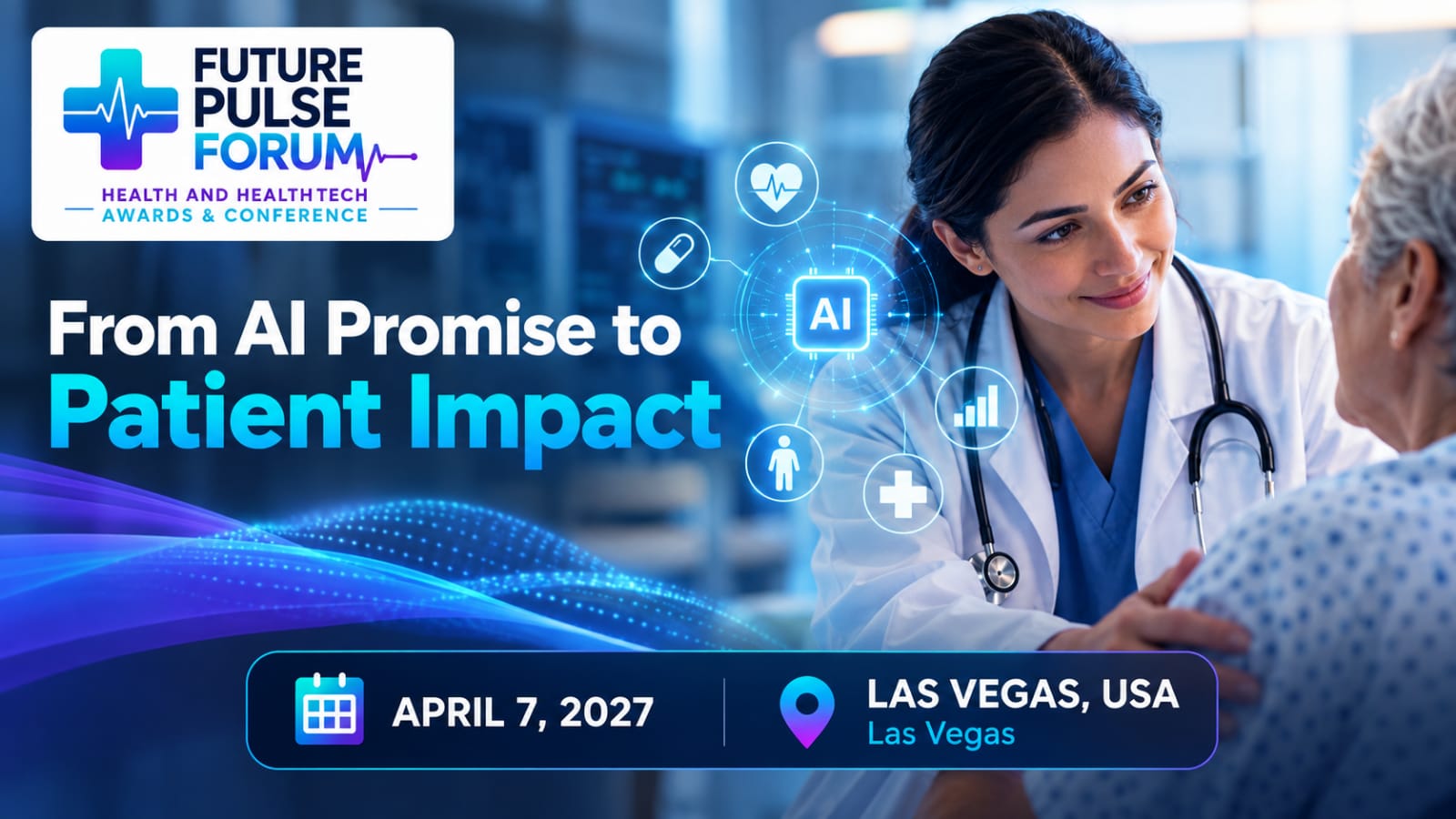
Artificial intelligence is moving from experimentation into everyday healthcare. Hospitals, health systems, technology companies, and clinicians are exploring AI for medical imaging, clinical documentation, patient monitoring, drug discovery, administrative automation, and decision support. Yet the real measure of progress is not how advanced an AI system appears, but whether it can create meaningful and measurable improvements for patients.
Moving from AI promise to patient impact requires healthcare organizations to look beyond technical performance. An AI tool may demonstrate strong results in a controlled environment, but its value depends on how reliably it performs in real clinical workflows, how easily healthcare professionals can use it, and whether it improves outcomes without creating additional risks or burdens.
From pilots to practical healthcare
Many healthcare AI initiatives begin as targeted pilots. These projects can demonstrate what a technology is capable of, but moving from pilot to large-scale implementation presents a different set of challenges.
AI systems must integrate with electronic health records, clinical workflows, existing software, and hospital processes. Clinicians also need to understand how an AI-generated recommendation was produced and when it should or should not be trusted.
This makes implementation just as critical as the underlying technology. Successful adoption requires collaboration between clinicians, data scientists, technology teams, administrators, and patients.
AI-supported breast cancer screening
One example of AI moving beyond technical promise comes from Germany's nationwide mammography screening program. The prospective PRAIM study, published in Nature Medicine in 2025, evaluated AI-supported double reading across 12 screening sites between July 2021 and February 2023.
The study included 463,094 women aged 50–69, with 260,739 receiving AI-supported screening. The AI-supported group had a breast cancer detection rate of 6 .7 per 1,000 screenings, compared with 5.7 per 1,000 in the standard double-reading group—an increase of 17.6%. Importantly, the recall rate was slightly lower in the AI-supported group rather than increasing alongside detection.
The study's significance lies not simply in AI identifying more cancers. It demonstrates how AI can be incorporated into an established clinical workflow while keeping radiologists involved in the screening process. It provides a useful example of the transition from an AI capability demonstrated in research to technology evaluated under real-world healthcare conditions.
Measuring what matters to patients
Healthcare organizations are increasingly looking beyond conventional technology metrics. Accuracy and model performance remain important, but they are only part of the picture.
Patient impact can involve earlier detection, more personalized care, reduced administrative burden, faster access to services, improved patient communication, and better continuity of care. In some applications, the benefit may come from giving clinicians more time to focus on patients rather than paperwork.
These outcomes also need to be evaluated over time. An AI solution that performs well initially may require continuous monitoring as patient populations, clinical practices, and data patterns change.
Trust, safety and human oversight
The transition from AI promise to patient impact also depends on trust. Healthcare decisions can carry significant consequences, making transparency, privacy, security, bias management, and human oversight central to responsible AI deployment.
AI should support clinical expertise rather than remove accountability from healthcare professionals. Clear escalation processes are particularly important when an AI system produces uncertain, incomplete, or potentially incorrect recommendations.
Building trust also requires involving patients. People need to understand when AI is being used in their care, what role it plays, and how their information is handled.
From technology to measurable outcomes
The next stage of healthcare AI will be defined less by demonstrations of what the technology can do and more by evidence of what it changes in practice.
Healthcare leaders will need to examine whether an AI system improves care, integrates sustainably into clinical workflows, performs across diverse patient populations, and can be monitored safely after deployment.
The objective is not to replace clinical expertise with algorithms. It is to use AI where it can help healthcare professionals make better-informed decisions, identify risks earlier, reduce unnecessary workload, and ultimately deliver better experiences and outcomes for patients.
Join the conversation at Future Pulse Forum
The Future Pulse Forum Health & Health Tech Awards & Conference brings together healthcare leaders, technology innovators, clinicians, and industry stakeholders to explore how emerging technologies are shaping the future of healthcare.
From artificial intelligence and digital health to patient-centric innovation, the forum provides a platform to examine the technologies, strategies, and partnerships turning healthcare innovation into practical impact.
Join Future Pulse Forum to connect with industry leaders, exchange insights, and explore the next generation of healthcare innovation.